


For many patients in the UK, Ireland, France, Switzerland, and the Netherlands, dental implants have become a financial dilemma. A treatment plan involving several implants, full-arch restoration, or an All-on-4 procedure can easily exceed £10,000–£30,000 through private dental practices at home.
That reality has made Hungary one of Europe’s leading dental tourism destinations, with Budapest attracting thousands of international patients every year.
Among the clinics frequently researched by dental tourists, Helvetic Clinics stands out because it combines Swiss management standards, specialist-led implantology, transparent pricing, and an established international patient system.
But is it genuinely worth traveling abroad for dental implants?
This guide provides an objective breakdown of costs, implant brands, treatment timelines, travel logistics, warranties, risks, and real-world considerations so you can make an informed decision.
Quick Verdict
Helvetic Clinics can be a financially attractive option for patients requiring multiple implants or full-mouth rehabilitation.
For a single implant, savings may be moderate once flights and accommodation are included.
For multiple implants, implant-supported bridges, or full-arch restorations, total savings often become substantial—even after accounting for travel costs. Current published pricing shows implant systems starting around €690 for a Neodent Helix GM implant and €1,290 for premium Straumann or AnyRidge options.
The biggest advantage is not simply lower pricing.
It is the combination of:
- Specialist-led implant treatment
- EU regulatory standards
- Modern diagnostic imaging
- Transparent treatment planning
- Dedicated international patient coordination
- Long-established dental tourism infrastructure
Why So Many Dental Patients Travel to Hungary
Hungary has spent decades building a reputation as Europe’s dental tourism hub.
Several factors contribute to this:
Lower Operating Costs
Dental clinics in Hungary generally face lower staffing, property, and operating expenses than clinics in London, Dublin, Zurich, or Amsterdam.
This allows clinics to offer lower treatment prices without necessarily reducing treatment quality.
High Patient Volume
Clinics serving international patients often perform significantly more implant procedures than many local practices.
Higher procedural volume can lead to more standardized workflows and greater specialization.
EU Medical Standards
Hungary is part of the European Union.
Dental clinics must comply with EU healthcare regulations, medical device standards, infection-control requirements, and patient protection rules.
For patients concerned about negative media stories involving poorly regulated overseas treatment, this distinction matters.
Budapest Is Easy to Reach
Direct flights connect Budapest with major cities across:
- United Kingdom
- Ireland
- France
- Switzerland
- Netherlands
- Scandinavia
The city’s medical tourism infrastructure is mature, making treatment logistics relatively straightforward.
What Makes Helvetic Clinics Different?
One mistake many comparison articles make is treating every dental tourism clinic as identical.
They are not.
A key differentiator at Helvetic Clinics is its specialist-focused treatment model.
For implant cases, procedures are typically handled by dedicated implantologists, oral surgeons, and periodontists rather than being performed entirely by a general dentist.
This matters because implant dentistry combines:
- Surgery
- Prosthodontics
- Bone management
- Long-term restorative planning
Complex cases benefit from multidisciplinary oversight.
Another notable differentiator is the clinic’s long-standing recognition by the organization Global Clinic Rating, which has repeatedly recognized Helvetic Clinics among leading international dental providers.
How Much Do Dental Implants Cost at Helvetic Clinics?
Pricing depends on:
- Implant brand
- Number of implants
- Bone quality
- Need for grafting
- Final restoration type
- Complexity of the case
Current published implant pricing includes:
| Treatment | Approximate Price |
| Neodent Helix GM Implant | €690 |
| Neodent Helix GM Acqua | €890 |
| Straumann / AnyRidge Premium Implant | €1,290 |
| Bone Augmentation | €900 |
| Sinus Lift | €940 |
UK vs Hungary Cost Comparison
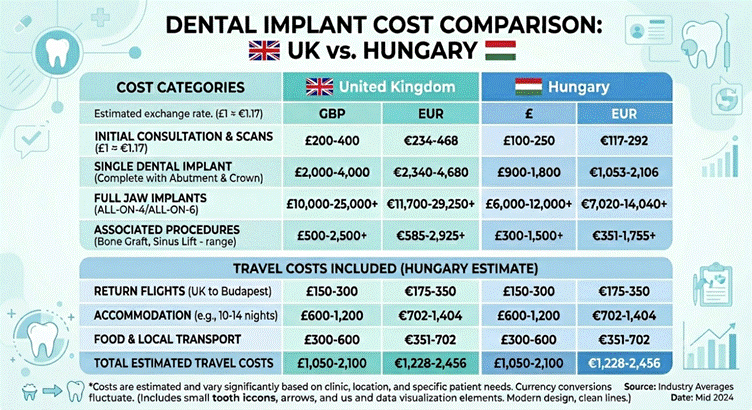
A useful way to evaluate value is to compare total treatment costs rather than implant prices alone.
Example: Single Implant
| Location | Typical Cost |
| UK Private Practice | £2,000–£2,900+ |
| Helvetic Clinics Implant Placement | Approximately €690–€1,290 |
Even after adding travel expenses, savings may still be meaningful.
Example: Multiple Implants
Patients requiring:
- 4 implants
- 6 implants
- Full-arch restoration
- All-on-4
- All-on-6
typically see the largest financial benefit.
The fixed travel cost is spread across a much larger treatment value.
Practical Insight
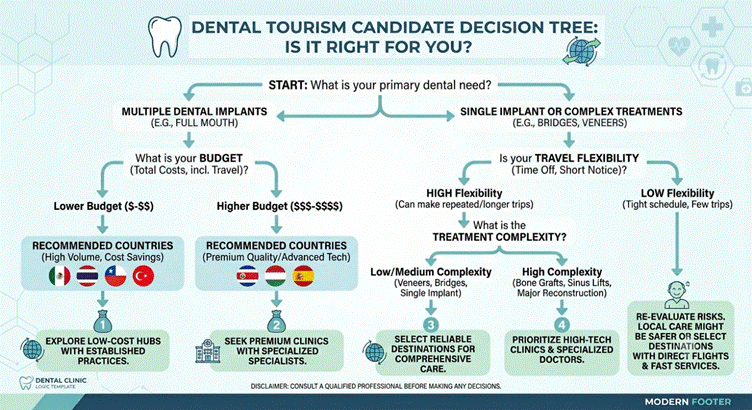
The more extensive your treatment plan, the stronger the financial argument for dental tourism becomes.
For a single implant, convenience may outweigh savings.
For full-mouth reconstruction, the savings can be difficult to ignore.
Which Implant Brands Does Helvetic Clinics Use?
Implant brand matters because long-term scientific evidence varies significantly between manufacturers.
Helvetic Clinics publicly states that it uses:
Neodent Helix GM
A premium implant system owned by the Straumann Group.
Designed to provide an affordable option while maintaining extensive clinical documentation.
Neodent Helix GM Acqua
An enhanced version featuring a hydrophilic surface.
In simple terms, the implant surface is engineered to attract blood and healing cells more efficiently during early bone integration.
Straumann
One of the most recognized implant brands globally.
Straumann implants are commonly selected by patients seeking premium systems with extensive long-term clinical data.
Practical Takeaway
If you are comparing quotes, always ask:
- Which implant system is included?
- Is the abutment included?
- Is the final crown included?
- Is the implant manufacturer documented in writing?
The cheapest quote is not always the best value.
Understanding the Two-Phase Implant Process
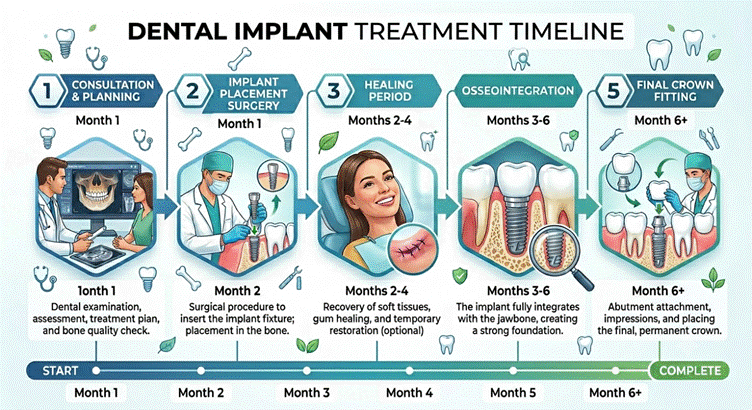
One of the biggest misconceptions in dental tourism is that implants can be completed in a long weekend.
For most patients, they cannot.
Phase 1: Implant Surgery
Typical stay:
3–5 days
This stage may include:
- Tooth extraction
- Bone grafting
- Sinus lift
- Implant placement
- Temporary restoration
After placement, the implant enters a healing phase.
What Is Osseointegration?
Osseointegration is the biological process where the jawbone grows around the titanium implant.
Think of it as concrete curing around a steel support post.
The implant becomes anchored directly into living bone.
This process generally takes:
3–6 months
depending on bone quality and healing response.
Phase 2: Final Restoration
Typical stay:
7–10 days
This visit usually includes:
- Digital impressions
- Abutment placement
- Crown fitting
- Bite adjustment
- Final checks
Why This Matters
Any clinic suggesting that every implant can be completed permanently in a few days deserves additional scrutiny.
The healing period exists for a biological reason.
What If You Need Bone Grafting or a Sinus Lift?
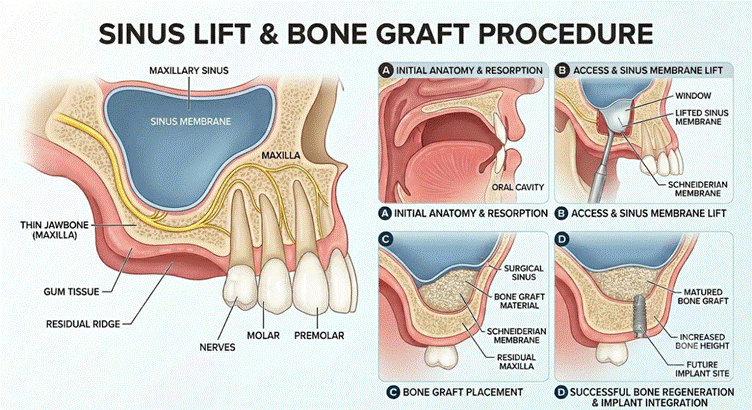
Not every patient has sufficient jawbone for implant placement.
Long-term tooth loss often causes bone shrinkage.
Two procedures are commonly used:
Bone Graft
A bone graft rebuilds areas where bone volume is insufficient.
Think of it as strengthening the foundation before building a house.
Sinus Lift
The upper back jaw sits below the sinus cavity.
When bone is too thin, a sinus lift creates additional vertical space for implant placement.
Current published pricing places both procedures around €900–€940.
What Does the Warranty Cover?
Warranty details should always be confirmed directly with the clinic because terms can change.
However, Helvetic Clinics publicly states that in the event of a verified implant failure, coverage may include:
- Replacement implant
- Replacement crown
- Partner-hotel accommodation
- Flight reimbursement up to €180 under specified conditions
The clinic reports implant failure rates below 2% at ten years for eligible cases.
Questions to Ask Before Booking
Request answers in writing:
- How long is the implant warranty?
- How long is the crown warranty?
- Are flights covered?
- Are accommodation costs covered?
- What conditions void the warranty?
- What documentation is required?
Realistic Travel Costs You Should Budget For
Many articles discuss dental costs but ignore travel expenses.
That is a mistake.
Budget for:
| Expense | Typical Range |
| Return Flight | £80–£350 |
| Hotel | £50–£150 per night |
| Local Transport | £20–£80 |
| Meals | Variable |
| Travel Insurance | Variable |
For major restorative work, these expenses usually represent a small percentage of total treatment costs.
For single-tooth treatment, they become more significant.
How the Patient Journey Typically Works
Step 1: Remote Consultation
You submit:
- Panoramic X-ray
- Existing scans
- Medical history
- Photos if requested
Step 2: Preliminary Treatment Plan
The clinic provides:
- Estimated costs
- Treatment stages
- Travel requirements
Step 3: First Visit
Diagnostics and surgery occur.
Modern clinics typically use:
- Panoramic X-rays
- CBCT 3D imaging
A CBCT scan is essentially a highly detailed three-dimensional map of your jawbone.
Step 4: Healing Period
Usually 3–6 months.
Step 5: Second Visit
Final crowns or bridges are fitted.
Common Risks Patients Should Understand
No reputable article should present implant dentistry as risk-free.
Potential complications include:
- Failed osseointegration
- Infection
- Peri-implantitis
- Nerve injury
- Crown fracture
- Gum recession
Risk increases when:
- Smoking is heavy
- Diabetes is poorly controlled
- Oral hygiene is poor
- Follow-up care is ignored
According to Helvetic Clinics, uncontrolled diabetes, recent jaw radiotherapy, severe immunosuppression, and certain medications may affect implant suitability.
Who Is an Ideal Candidate for Helvetic Clinics?
The strongest fit is usually someone who:
✓ Needs multiple implants
✓ Requires full-arch restoration
✓ Has received expensive domestic quotes
✓ Can travel twice within a 3–6 month period
✓ Wants internationally recognized implant brands
✓ Values specialist-led treatment
Patients needing a single straightforward implant may find that local treatment offers greater convenience despite higher cost.
Final Assessment: Is Helvetic Clinics Worth Considering?
For patients researching dental implants in Hungary, Helvetic Clinics represents a legitimate option rather than simply a low-cost alternative.
Its strongest advantages are:
- Significant potential cost savings
- Established dental tourism infrastructure
- Use of recognized implant systems such as Neodent and Straumann
- Specialist-led treatment pathways
- EU regulatory environment
- Transparent published pricing
- International patient support
The most important consideration is understanding that implant treatment is a process, not an event.
Most successful cases require:
- Initial surgery
- A healing period of several months
- A second visit for final restoration
Patients who plan for that reality—and budget for travel appropriately—are generally in the best position to evaluate whether treatment in Budapest makes financial and clinical sense.
