

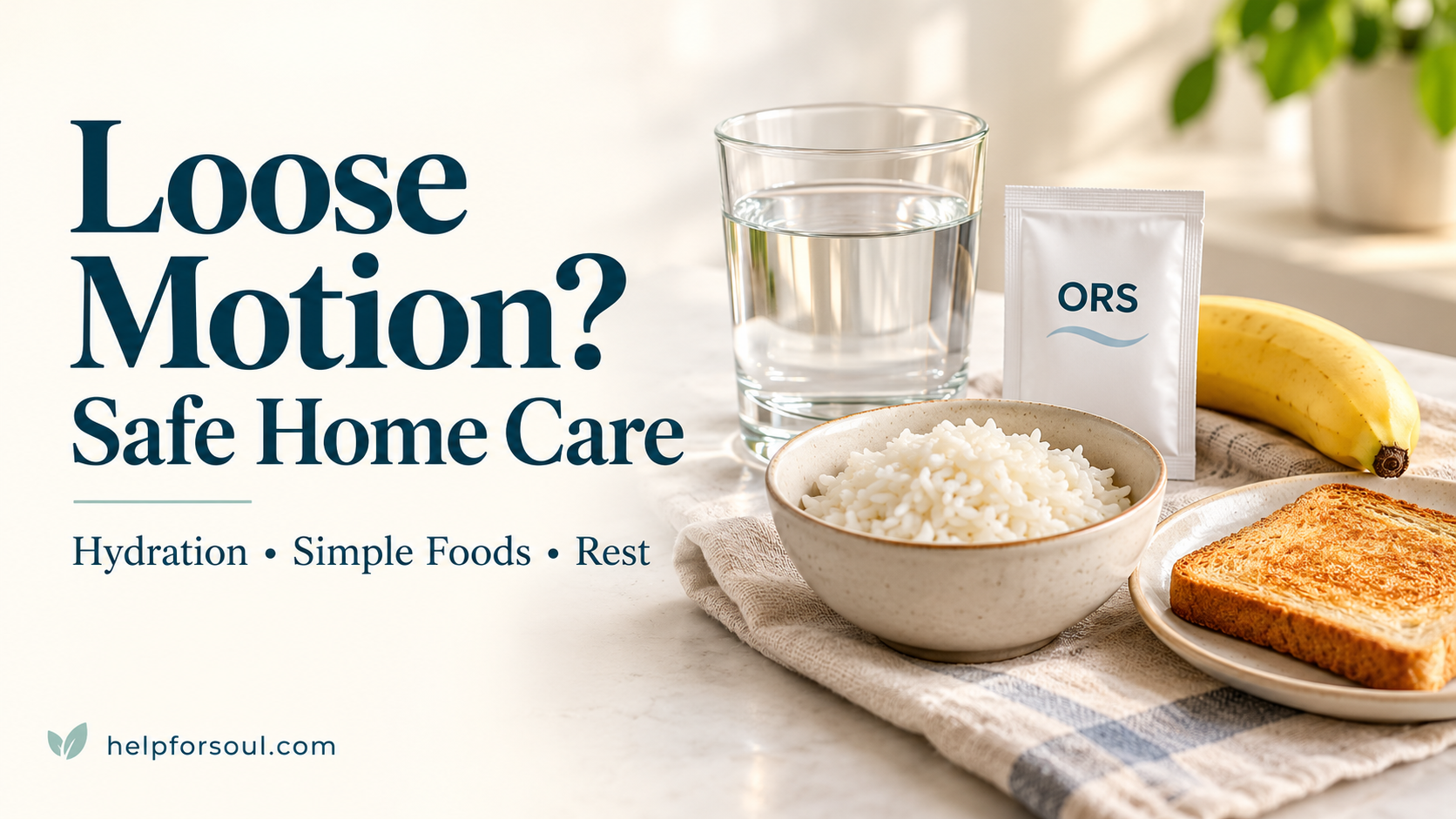
If you are wondering how to cure loose motion naturally, start with replacing lost fluids, eating as tolerated, and resting. Many short episodes of diarrhoea improve on their own. However, no home remedy can reliably cure every cause or stop loose stools instantly.
Preventing dehydration is the priority. Oral rehydration solution (ORS) replaces the water and salts lost through diarrhoea, although it does not directly treat the underlying cause. The NIDDK’s guidance on treating diarrhoea explains why replacing fluids is central to recovery. www.niddk.nih.gov
This guide mainly covers adults with mild, short-term symptoms. Blood in stools, severe abdominal pain, confusion, or an inability to keep fluids down require medical attention. www.niddk.nih.gov
Replace Lost Fluids First
Start drinking regularly rather than waiting until you feel very thirsty. If you feel nauseated, take small, frequent sips.
Water helps with hydration, but repeated watery stools also remove electrolytes—the salts your body needs to function normally. ORS helps replace both fluid and electrolytes. www.niddk.nih.gov
When using a pharmacy ORS sachet:
- Mix the whole sachet with exactly the amount of safe drinking water stated on the packet.
- Do not assume every sachet requires one litre; packet sizes differ.
- Do not add extra sugar, salt, milk, or juice.
- Do not make the solution stronger to try to speed up recovery.
Incorrectly concentrated mixtures can be harmful. www.unicef.org
How to Make a Temporary Rehydration Drink
If an ORS sachet is unavailable, you can prepare a temporary sugar-and-salt solution:
| Ingredient | Exact amount |
|---|---|
| Safe drinking water | 1 litre |
| Sugar | 6 level teaspoons |
| Table salt | ½ level teaspoon |
Stir until the sugar and salt dissolve. Use measuring teaspoons, not tablespoons, and keep the spoonfuls level.
This recipe follows UNICEF’s home rehydration guidance. Too much sugar can worsen diarrhoea, while too much salt can be dangerous. If you cannot measure accurately, obtain a prepared ORS product rather than guessing. www.unicef.org
People with kidney disease, diabetes, or other conditions affecting fluid management should ask a clinician which solution and quantity are appropriate. www.niddk.nih.gov
Eat Small Meals When You Feel Ready
You do not need to stop eating until loose motions disappear. Eat when your appetite returns, starting with manageable portions.
The NIDDK’s dietary advice for diarrhoea discourages fasting and unnecessarily restrictive diets. Most people can return towards their normal meals as tolerated. www.niddk.nih.gov
Simple options include:
| Food | Practical serving suggestion |
|---|---|
| White rice | A small serving, without heavy sauces |
| Banana | A small portion if tolerated |
| Toast or crackers | Plain varieties |
| Potato | Boiled or baked without rich toppings |
| Cooked egg or lean chicken | A modest portion when your appetite improves |
These foods provide nourishment; they are not cures for an infection. Small meals spread throughout the day may be easier to tolerate than large ones. MedlinePlus includes these options in its guidance on eating when you have diarrhoea. medlineplus.gov
There is no need to live on rice and bananas for several days. Gradually add variety as you feel better.
Temporarily Avoid Common Dietary Triggers
Some foods and drinks can worsen symptoms while your digestive system recovers. Temporarily limit or avoid:
- Fried foods and high-fat meals.
- Alcohol and caffeinated drinks.
- Very sweet drinks and large amounts of fruit juice.
- Sugar-free sweets or gum containing sugar alcohols such as sorbitol.
- Milk products if they increase gas, cramps, or loose stools.
Some people temporarily have trouble digesting lactose after diarrhoea. This does not necessarily mean dairy must be avoided permanently. www.niddk.nih.gov
Spicy meals may also be uncomfortable. Choose simpler meals while symptoms are active, and avoid using fizzy drinks as your main source of hydration. www.nhs.uk
Understand What Natural Remedies Can Actually Do
A useful question to ask about any home remedy is: Does it replace fluids, provide nutrition, or treat the cause?
These are different functions. Rice and bananas can help you eat while feeling unwell. Rehydration drinks replace fluid losses. Neither guarantees that diarrhoea will stop immediately.
Yoghurt may be tolerated as food, but it should not be treated as a guaranteed cure. Probiotic supplements are also not essential for everyone. NIDDK notes that evidence does not consistently support their use for treating or preventing diarrhoea and recommends discussing complementary remedies with a doctor. www.niddk.nih.gov
Be cautious about promises that a kitchen ingredient will “stop loose motion instantly.” Temporary symptom relief does not establish that dehydration or the underlying cause has been addressed.
Know When to Seek Medical Help
Get prompt medical advice if you experience:
- Blood, pus, or black, tarry stools.
- Severe abdominal pain.
- Repeated vomiting or difficulty keeping fluids down.
- Very little urine, marked dizziness, or other signs of dehydration.
- High fever.
- Six or more loose stools in a day.
- Diarrhoea lasting more than two days.
The NIDDK’s guidance on diarrhoea warning signs also advises closer contact with a doctor during pregnancy, after age 65, while taking antibiotics, or when the immune system is weakened. www.niddk.nih.gov
Confusion, reduced responsiveness, or sudden severe abdominal pain warrant emergency care. www.nhs.uk
Children Need Earlier Assessment
Seek prompt medical advice for an infant with diarrhoea, particularly a baby younger than 12 months. Reduced wet nappies, poor feeding, and unusual drowsiness need urgent attention. For older children, contact a clinician if diarrhoea lasts more than a day. www.niddk.nih.gov
Continue breastfeeding or usual-strength formula. Do not dilute formula to treat diarrhoea. www.nhs.uk
Rest and Reduce the Spread of Infection
Stay home while unwell, wash your hands thoroughly with soap and water, and clean frequently touched bathroom surfaces. Avoid preparing food for other people while symptoms are active.
The NHS recommends staying away from work or school until at least 48 hours after the last episode of diarrhoea or vomiting to reduce the spread of infection. www.nhs.uk
For more information on everyday wellbeing, explore our health and wellness guides.

