


An evidence-based comparison for students trying to clear acne without emptying their bank account.
Quick Answer
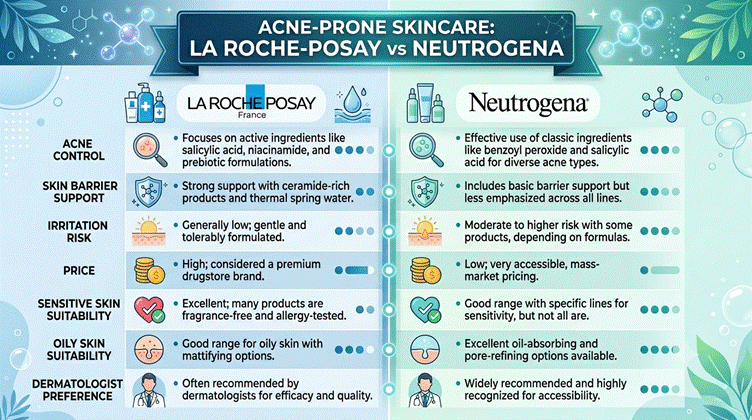
For most college students with acne-prone skin, La Roche-Posay is generally the better choice if you have sensitive skin, recurring irritation, or a damaged skin barrier, while Neutrogena offers better value if your primary goal is affordable acne control and you tolerate stronger formulations well.
The short version:
| If You Want… | Better Choice |
| Best overall for sensitive acne-prone skin | La Roche-Posay |
| Best budget acne routine | Neutrogena |
| Stronger over-the-counter acne cleansers | Neutrogena |
| Better skin barrier support | La Roche-Posay |
| Less risk of irritation | La Roche-Posay |
| Best value per dollar | Neutrogena |
| Dermatologist-favored acne care | La Roche-Posay |
If you’re a typical college student dealing with stress breakouts, late nights, inconsistent sleep, and occasional skin sensitivity, La Roche-Posay usually earns the edge—but not because it’s automatically more effective. The real advantage is that it often balances acne treatment with barrier protection more successfully.
Why This Comparison Matters More Than Most Reviews Explain
Most brand comparisons focus on marketing claims, star ratings, or influencer opinions.
The real question students should ask is:
Which brand helps clear acne while causing the least amount of irritation over an entire semester?
That’s where many reviews miss the mark.
Acne products fail for two reasons:
- They don’t treat acne effectively.
- They treat acne so aggressively that users quit because their skin becomes dry, red, or irritated.
The second problem is especially common among college students.
Stress, poor sleep, irregular eating habits, air-conditioned dorms, and overusing active ingredients can all weaken the skin barrier. When that happens, even good acne products start causing problems.
This is where the philosophy of these brands begins to differ.
Understanding the Brand Philosophies
La Roche-Posay: Acne Treatment With Barrier Protection
La Roche-Posay was developed around dermatology clinics and sensitive skin care.
Many acne-focused products in the Effaclar line combine acne-fighting ingredients with soothing ingredients such as:
- Niacinamide
- Ceramide-related barrier-support ingredients
- Thermal spring water
- Zinc PCA
- LHA (Lipo-Hydroxy Acid)
For example, Effaclar Duo+M contains salicylic acid, niacinamide, and LHA in the same formula. (La Roche-Posay)
The goal is not just clearing pimples.
The goal is reducing breakouts while minimizing irritation.
Practical Takeaway
If your skin often feels:
- Tight
- Red
- Stinging
- Dry after cleansing
La Roche-Posay is usually worth considering.
Neutrogena: Maximum Acne Treatment for the Money
Neutrogena built its reputation on affordable, widely available acne products.
Many of its classic acne products focus on proven active ingredients:
- Salicylic acid
- Benzoyl peroxide
- Glycolic acid
For example, Neutrogena Oil-Free Acne Wash contains 2% salicylic acid, which is the maximum OTC concentration commonly used in acne cleansers. (Neutrogena)
This often makes Neutrogena products more aggressive than comparable La Roche-Posay options.
Practical Takeaway
If your skin is:
- Oily
- Resilient
- Rarely irritated
Neutrogena can provide excellent results at a lower cost.
Ingredient Breakdown: Which Brand Actually Has Better Acne Ingredients?
Salicylic Acid
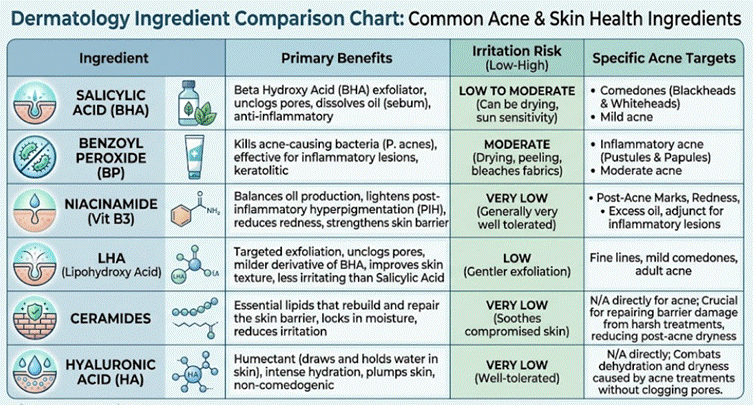
Salicylic acid remains one of the best ingredients for:
- Blackheads
- Whiteheads
- Clogged pores
- Excess oil
Because it is oil-soluble, it can penetrate pores and help remove trapped debris. (Allure)
Neutrogena Advantage
Many Neutrogena acne cleansers contain 2% salicylic acid. (Neutrogena)
La Roche-Posay Advantage
La Roche-Posay often combines lower salicylic acid levels with supporting ingredients such as:
- Niacinamide
- LHA
- Zinc PCA
This can improve tolerability while still targeting acne. (La Roche-Posay)
Winner
Sensitive skin: La Roche-Posay
Oily skin: Neutrogena
Benzoyl Peroxide
Benzoyl peroxide remains one of the most effective OTC acne ingredients for inflammatory acne.
Typical OTC strengths range from 2.5% to 10%.
Neutrogena
Offers multiple benzoyl peroxide products, particularly in the Stubborn Acne line.
La Roche-Posay
Also offers benzoyl peroxide treatments, though formulations often include additional soothing ingredients.
Winner
Tie.
The ingredient matters more than the logo on the tube.
Niacinamide
Niacinamide helps:
- Reduce redness
- Improve barrier function
- Support oil regulation
- Fade post-acne marks
La Roche-Posay includes niacinamide throughout many Effaclar products. (La Roche-Posay)
Neutrogena uses it less consistently across its acne-focused lineup.
Winner
La Roche-Posay
The Hidden Factor Most Students Ignore: Skin Barrier Health
This is where La Roche-Posay earns most of its reputation.
Many acne sufferers assume:
More dryness = more effectiveness.
That’s often wrong.
Research and dermatologist consensus increasingly emphasize maintaining barrier function while treating acne.
When the barrier becomes damaged:
- Redness increases
- Irritation increases
- Oil production may increase
- Treatment adherence decreases
Many users reporting problems with strong acne cleansers describe burning, dryness, and irritation after frequent use. Community discussions regularly highlight this issue with stronger salicylic-acid routines. (Reddit)
Unique Insight
The best acne routine is usually not the strongest routine.
It’s the routine you’ll still be using consistently three months from now.
Cost Comparison: Is La Roche-Posay Worth the Extra Money?
Typical Student Budget Analysis
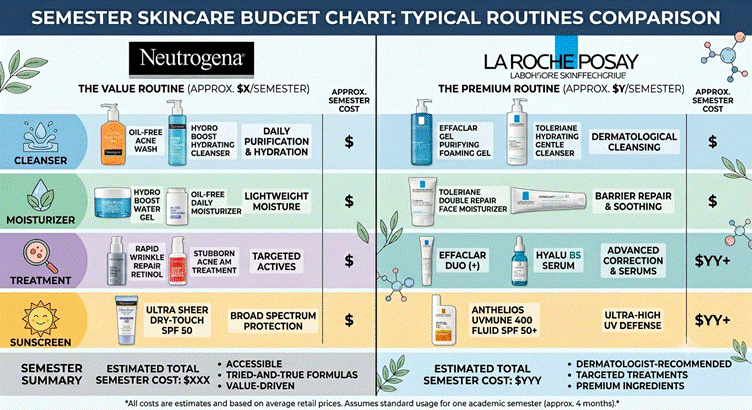
Approximate positioning:
| Category | Neutrogena | La Roche-Posay |
| Cleanser | Lower cost | Higher cost |
| Moisturizer | Lower cost | Higher cost |
| Treatment Serum | Moderate | Higher |
| Full Routine Cost | Budget-Friendly | Premium Drugstore |
A student using:
- Cleanser
- Moisturizer
- Spot treatment
for an entire semester may spend significantly less with Neutrogena.
Value Reality
If Neutrogena works for your skin, it is almost always the better financial value.
If Neutrogena repeatedly causes dryness or irritation and you end up replacing products, the savings disappear quickly.
Practical Recommendation
A hybrid routine often delivers the best value:
- Neutrogena cleanser
- La Roche-Posay treatment
- Affordable moisturizer
- Daily sunscreen
This approach targets the products where formulation quality matters most.
Can You Mix La Roche-Posay and Neutrogena Products?
Yes.
There is no reason you must stay within a single brand.
In fact, many experienced skincare users mix brands routinely.
Example:
Morning
- Gentle cleanser
- Moisturizer
- SPF 30–50 sunscreen
Evening
- Neutrogena Oil-Free Acne Wash
- La Roche-Posay Effaclar treatment
- Moisturizer
Important Rule
Avoid introducing multiple strong actives simultaneously.
If you’re starting:
- Salicylic acid
- Benzoyl peroxide
- Retinoids
Add them one at a time.
Which Brand Is Better for Specific Acne Types?
Stress Acne
Common among college students.
Winner: La Roche-Posay
Stress often increases inflammation, making gentler formulations valuable.
Hormonal Acne
Winner: Tie
Neither brand directly treats hormonal causes.
Both can help manage symptoms.
Persistent hormonal acne may require prescription options.
Oily Skin
Winner: Neutrogena
Stronger oil-control formulations often perform well for very oily skin. (Neutrogena)
Sensitive Acne-Prone Skin
Winner: La Roche-Posay
This is arguably the category where La Roche-Posay creates the largest advantage.
Post-Acne Marks (PIH)
Winner: La Roche-Posay
Niacinamide-containing formulations may help improve the appearance of post-inflammatory discoloration over time. (La Roche-Posay)
What Dermatologists Tend to Prefer
A common misconception is that dermatologists universally recommend expensive skincare.
They don’t.
Most dermatologists focus on:
- Proven active ingredients
- Tolerability
- Consistency
That said, La Roche-Posay has developed a particularly strong reputation within dermatology because many formulations are designed for sensitive skin and are extensively dermatologist-tested. (La Roche-Posay)
This doesn’t mean Neutrogena is ineffective.
It means La Roche-Posay often reduces the risk of irritation while delivering comparable acne-fighting benefits.
Final Verdict: Which Should a College Student Buy?
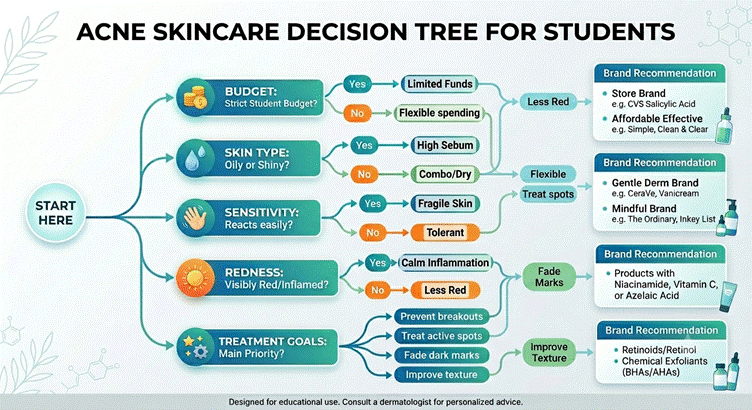
Choose Neutrogena If:
✓ You have a tight budget
✓ Your skin is oily
✓ You tolerate acne ingredients well
✓ You want maximum acne treatment per dollar
Choose La Roche-Posay If:
✓ Your skin becomes irritated easily
✓ Previous acne products felt harsh
✓ You struggle with redness
✓ You want better barrier support
✓ You can justify spending more
The Best Overall Answer
For the average college student with acne-prone skin, La Roche-Posay is usually the better brand overall, but Neutrogena remains the better value purchase.
If your budget allows only one upgrade, prioritize:
- A gentle cleanser
- A good moisturizer
- Daily sunscreen
Those three choices often improve acne outcomes more than constantly switching treatment products.
Frequently Asked Questions
Is La Roche-Posay actually worth the extra money?
For sensitive acne-prone skin, often yes. The difference is usually not stronger acne treatment but better tolerability and barrier support.
Which brand is gentler?
La Roche-Posay generally has the edge for sensitive skin.
Can I use La Roche-Posay Effaclar with a Neutrogena moisturizer?
Yes. Mixing brands is completely acceptable.
Will stronger products clear acne faster?
Not necessarily. Overly aggressive routines frequently lead to irritation and inconsistent use.
Which brand should a beginner start with?
Most beginners do well starting with a simple routine:
- Gentle cleanser
- Moisturizer
- Sunscreen
- One acne treatment
If budget is the priority, start with Neutrogena. If sensitivity is the priority, start with La Roche-Posay.
