


If you are searching for when is men’s mental health month, the answer can be confusing because different awareness campaigns use different months and names.
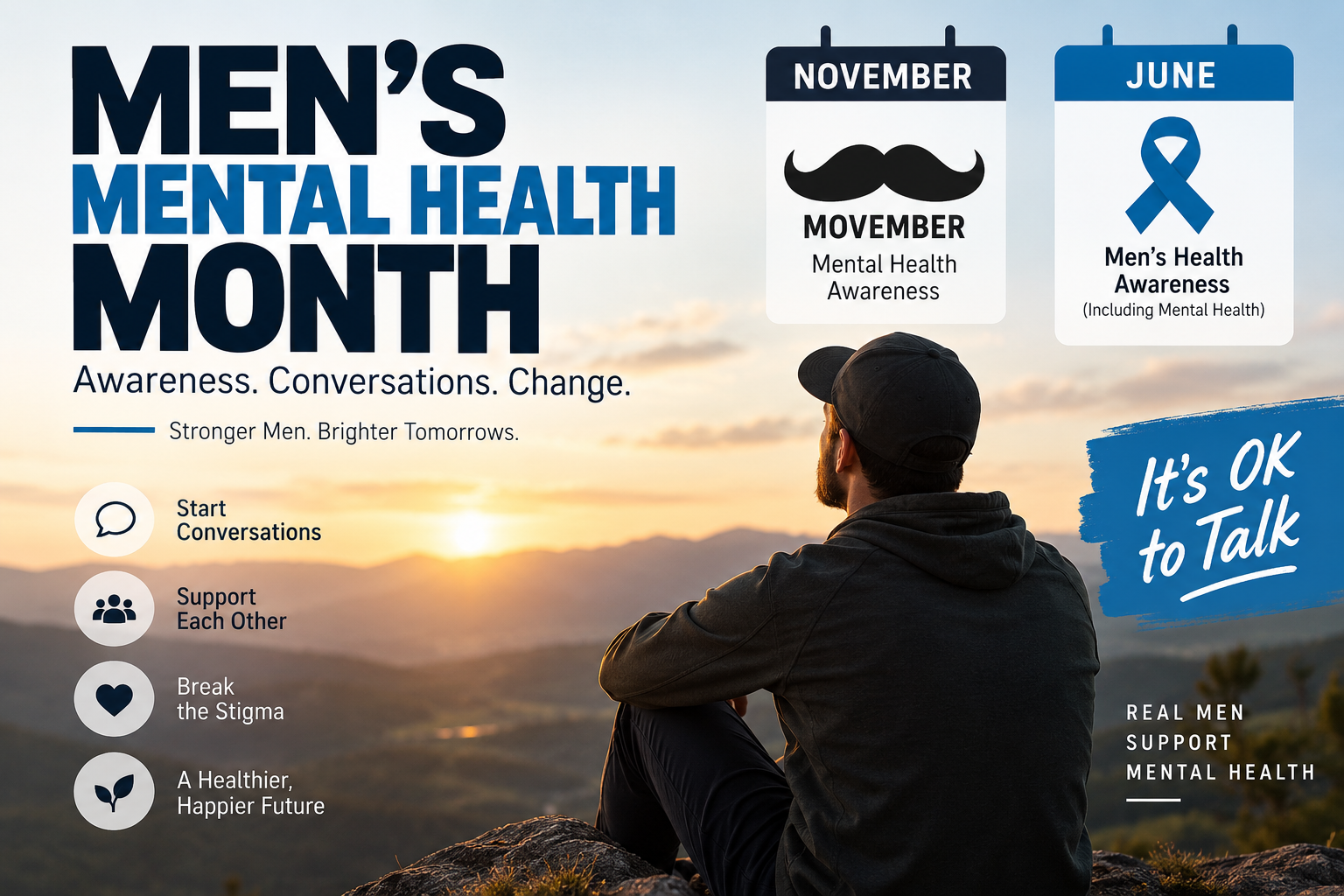
November is widely associated with men’s mental health awareness through Movember, while June is also used for broader men’s health awareness, including mental health. These observances have different histories and purposes, which is why you may see both months mentioned online.
This guide explains when men’s mental health month is, when women’s mental health month is, what November is for awareness, when men’s health awareness began, and why these awareness periods matter.
Table of Contents
When Is Men’s Mental Health Month?
November is commonly associated with men’s mental health awareness, particularly through Movember.
Movember is a major men’s health movement that uses November to encourage conversations around men’s health, including mental health and suicide prevention. Its current mental-health work focuses on prevention, early intervention, connection and practical support. Movember’s mental health resources provide information about recognising signs, starting conversations and supporting someone who may be struggling.
However, November is not the only month connected with men’s mental health.
June is also associated with Men’s Health Month, a broader observance covering both physical and mental health. Men’s Health Week has roots going back to 1994, when it was formally established as a national awareness week. Over time, men’s health awareness expanded into broader month-long activity.
That means the answer depends on what someone means by “Men’s Mental Health Month”:
- November — strongly associated with Movember and men’s mental health awareness.
- June — associated with broader Men’s Health Month and men’s wellbeing.
- Year-round — mental health awareness and support are important throughout the year.
For someone searching specifically for men’s mental health awareness activities, November is the month most commonly connected with Movember.
Why Is November Associated With Men’s Mental Health?
November has become strongly connected with men’s health because of Movember.
The Movember movement began by using the moustache as a way to start conversations about men’s health. The campaign later developed into a major global movement addressing several men’s health issues, including mental health and suicide prevention.
One important part of the campaign is making conversations about mental health easier.
Many people may find it difficult to talk openly when they are experiencing stress, anxiety, depression, loneliness or other emotional difficulties. Awareness campaigns can create an opportunity to start that conversation without waiting for a crisis.
Movember describes its approach as focusing on prevention, early intervention and helping men build mental fitness and stronger support networks.
This is why you will often see November described as a month for men’s mental health awareness.
What Month Is November for Awareness?
November is associated with several awareness campaigns, but one of the most recognisable men’s health campaigns during the month is Movember.
Movember brings attention to men’s health and encourages people to talk about issues that men may sometimes find difficult to discuss.
Mental health is an important part of that conversation.
The month can be used as an opportunity to:
- Check in with friends and family
- Talk openly about emotional wellbeing
- Learn about common mental health concerns
- Encourage someone to seek professional support
- Reduce shame around asking for help
- Build stronger social connections
- Pay attention to changes in someone’s behaviour
- Learn how to have a supportive conversation
The important point is that awareness should not end when November ends.
A person experiencing ongoing mental health difficulties may need support at any time of the year.
When Did Men’s Mental Health Month Start?
There is no single universally recognised starting date for a separate “Men’s Mental Health Month.”
This is an important distinction.
The history of men’s health awareness is older than the modern use of the phrase “Men’s Mental Health Month.” A formal Men’s Health Week was established in 1994, creating an organised awareness framework around men’s health.
Mental health later became a much more prominent part of men’s health campaigns.
Movember also helped bring men’s mental health into mainstream public conversations. Rather than treating mental health as completely separate from men’s health, modern campaigns increasingly recognise that emotional wellbeing, social connection and physical health can affect one another.
So, if you are asking when did men’s mental health month start, there isn’t one universally agreed year that can accurately be described as the beginning of a worldwide “Men’s Mental Health Month.”
Instead, it is better to understand it as an awareness movement that developed through different men’s health and mental health campaigns over time.
Is Men’s Mental Health Month in June or November?
This is one of the most common sources of confusion.
The simplest explanation is:
June is associated with broader Men’s Health Month, while November is strongly associated with Movember and men’s mental health awareness.
These are related but not identical observances.
Men’s Health Month covers a wide range of subjects, including:
- Mental health
- Physical health
- Preventive healthcare
- Healthy lifestyle choices
- Men’s wellbeing
- Awareness of health conditions
- Early detection and treatment
November’s Movember activities place a particularly strong focus on men’s health issues and include mental health and suicide prevention.
Therefore, seeing June or November mentioned does not necessarily mean that one source is wrong.
The terminology and campaigns can vary depending on the organisation, event or awareness programme being discussed.
When Is Women’s Mental Health Month?
Women’s health and mental health awareness can also be connected with different awareness periods.
May is commonly associated with Women’s Health Month, while Mental Health Awareness Month is also observed during May in many awareness calendars.
This creates an opportunity to discuss issues affecting women’s physical and mental wellbeing, including emotional health, stress, anxiety, depression and access to appropriate support.
It is important not to treat men’s and women’s mental health awareness as competing campaigns.
Both are intended to encourage greater awareness, earlier conversations and better access to support.
Mental health affects individuals differently, and people can benefit from having opportunities to discuss concerns without shame or embarrassment.
Why Men’s Mental Health Awareness Matters
Men’s mental health deserves attention for the same basic reason that mental health deserves attention generally: emotional wellbeing is an important part of overall health.
A person does not need to wait until their situation becomes severe before talking to someone.
Mental health difficulties can sometimes appear gradually.
Someone may become:
- More withdrawn than usual
- Less interested in activities they normally enjoy
- Irritable or unusually angry
- Constantly tired
- More isolated from friends or family
- Overwhelmed by everyday responsibilities
- Unable to sleep properly
- Sleeping much more than usual
- Finding it difficult to concentrate
- Using alcohol or other substances to cope
None of these signs automatically means someone has a mental health condition.
However, noticeable changes can be a reason to check in with the person and encourage them to seek appropriate support if needed.
How to Support Men’s Mental Health
Supporting someone’s mental health does not always require having the perfect words.
Often, simply starting a conversation can help.
Instead of asking a complicated question, try something simple such as:
“You’ve seemed a little different lately. How are you doing?”
Give the person time to answer.
If they do not want to talk immediately, avoid forcing the conversation. Let them know that you are available when they are ready.
Listen Instead of Immediately Trying to Fix Everything
When someone talks about a difficult experience, the natural reaction may be to offer solutions.
Sometimes listening is more useful.
You can ask questions such as:
- “Do you want to talk about it?”
- “How long have you been feeling this way?”
- “Is there anything I can do?”
- “Would you like help finding someone to speak with?”
The goal is not to diagnose the person.
The goal is to show that they do not have to handle everything alone.
Encourage Professional Support
Friends and family can provide valuable emotional support, but they are not substitutes for trained healthcare professionals.
If someone’s mental health is affecting everyday life, encouraging them to speak with an appropriate healthcare professional can be an important next step.
If someone is experiencing a mental health emergency or believes they may be in immediate danger, urgent professional help should be sought rather than relying only on friends or online information. The NHS mental health services provide information about accessing mental health support and urgent help.
Mental Health and Social Connection
Social connection is an important part of wellbeing.
A person can have many people around them and still feel isolated. Likewise, someone who normally appears confident and social may be experiencing difficulties privately.
Small actions can make a difference:
- Call a friend
- Meet someone for a walk
- Have a meal together
- Join a sports or hobby group
- Check in with someone who has become distant
- Make time for family
- Talk about something that has been bothering you
Healthy relationships can provide emotional support and a sense of connection.
If you are interested in understanding relationships and communication more broadly, you can also read What Is a Sex-Positive Relationship?.
Mental Health in the Workplace
Work can have a major influence on everyday wellbeing.
Deadlines, long hours, financial pressure, workplace conflict and lack of rest can contribute to stress.
Employers and employees can both play a role in creating healthier working environments.
Simple steps may include:
- Taking proper breaks
- Maintaining reasonable boundaries
- Talking to a manager when workload becomes unmanageable
- Using available workplace support
- Taking time away from work when appropriate
- Staying connected with colleagues
- Avoiding the idea that asking for help is a weakness
For people working in healthcare environments, understanding workplace systems and employee resources can also be useful. Our guide ESR Login NHS: The Complete Guide to Accessing Your Electronic Staff Record explains how the Electronic Staff Record system is used for employment-related information.
What Can You Do During Men’s Mental Health Month?
You do not need to organise a large event to participate in men’s mental health awareness.
Small actions can be meaningful.
1. Check on Someone
Send a message to a friend you have not spoken to recently.
A simple “How are you really doing?” can open the door to a meaningful conversation.
2. Learn the Warning Signs
Learn more about common signs of stress, anxiety, depression and other mental health difficulties.
Understanding the signs can make it easier to recognise when someone may need support.
3. Start a Conversation
Talking about mental health does not have to be formal.
You can discuss stress, work pressure, relationships, sleep, loneliness or anything else that is affecting wellbeing.
4. Take Care of Your Own Mental Health
Awareness should not only be about helping other people.
Make time for sleep, movement, relationships, hobbies, relaxation and activities that support your wellbeing.
5. Encourage Professional Help
If a problem is persistent or seriously affecting someone’s daily life, encourage them to seek appropriate professional support.
There is no shame in asking for help.
Men’s Mental Health Awareness Should Not Stop in November
November provides a useful opportunity to talk about men’s mental health, but mental health does not follow a calendar.
Someone may struggle in January, April, July or any other month.
That is why awareness campaigns are most useful when they lead to long-term changes in how people talk about mental health.
The goal should not simply be to post about men’s mental health for one month.
It should be to make conversations about mental wellbeing easier throughout the year.
A friend checking in, a family member listening, a workplace creating space for wellbeing, or an individual deciding to seek professional help can all be valuable steps.
Frequently Asked Questions
When is men’s mental health month?
November is widely associated with men’s mental health awareness through Movember. June is also associated with broader Men’s Health Month, which includes mental health.
What month is November for awareness?
November is strongly associated with Movember and men’s health awareness, including men’s mental health.
When did men’s mental health month start?
There is no single universally recognised start date for a separate worldwide Men’s Mental Health Month. Modern men’s mental health awareness developed through broader men’s health and mental health campaigns over time.
When is women’s mental health month?
May is commonly associated with Women’s Health Month and mental health awareness activities.
Is June also a men’s mental health awareness month?
June is associated with Men’s Health Month, a broader observance that includes physical and mental health. This is separate from the November awareness associated with Movember.
Why is men’s mental health important?
Men’s mental health is an important part of overall wellbeing. Awareness can encourage people to recognise problems earlier, talk to trusted people and seek appropriate professional support when needed.
How can I support a man who may be struggling?
Start with a calm conversation, listen without immediately judging or trying to solve everything, and encourage professional support when appropriate. If there is an immediate safety concern or mental health emergency, seek urgent professional help.
Final Thoughts
If you searched when is men’s mental health month, the easiest answer is November for the men’s mental health awareness associated with Movember, while June is associated with the broader Men’s Health Month.
The two should not be treated as contradictory.
More importantly, men’s mental health awareness should not be limited to one month. November can be a useful reminder to start conversations, check on people you care about and learn more about mental wellbeing.
The most valuable part of an awareness month is what happens after the calendar changes: continuing to talk, listen, connect and seek help when it is needed.
