



By a Pacific finance writer covering banking and financial inclusion across the Asia-Pacific region
If you’ve been searching for Kina Bank, you’re probably looking for one of a few things: a clear explanation of what the bank actually does, how to access its services digitally, what makes it different from PNG’s other banks, or whether Kina Securities (ASX: KSL) is worth paying attention to as an investor. This article covers all of it, without making you dig through four different pages of the bank’s own website to piece the picture together.
Kina Bank is Papua New Guinea’s second largest bank and one of the most diversified financial institutions in the Pacific. It’s been around since 1985, listed on two stock exchanges, and quietly built something that no competitor in PNG has matched: a combination of retail banking, wealth management, fund administration, and stockbroking under one roof.
Here’s what you actually need to know.
What Kina Bank Is (The Snapshot Answer)
Kina Securities Limited, the parent company of Kina Bank, was established in 1985 and is Papua New Guinea’s second largest bank and financial services company. It offers customers end-to-end financial solutions from savings accounts to business loans, investments to mortgages, financial advice, and investment management. It is also the largest wealth management business in PNG, with more than PGK 11 billion in funds under management, and administers accounts on behalf of more than 938,000 beneficiaries whose funds total almost PGK 19 billion.
And it’s not just a local institution quietly doing business in Port Moresby. Kina Bank is listed on the Australian Securities Exchange (ASX: KSL) and PNG’s own stock exchange (PNGX: KSL), and is also the leading stockbroking company in PNG.
That’s a meaningful distinction. Most people think of Kina Bank as a retail bank where you open a savings account or apply for a home loan. That’s true, but it only describes one part of what the organization actually does. Hang tight, because the wealth management and fund administration side of the business is where things get genuinely interesting.
Banking Services: What Kina Offers Everyday Customers
For individual and business customers in Papua New Guinea, Kina Bank covers the full range of everyday banking needs across its branch network and digital platforms.
For personal banking customers, the core offerings include:
● Savings and transactional accounts
● Home loans and personal loans (including school fees loans)
● Credit and debit cards
● Foreign currency and overseas telegraphic transfers
● Insurance premium funding
For business and corporate clients, Kina delivers commercial loans, trade finance facilities, equipment finance, bank guarantees, and treasury services. According to the Asian Development Bank, its Trade Finance Program signed a credit guarantee facility with Kina Bank in 2017 supporting up to $4 million of trade annually in Papua New Guinea, specifically to expand financial support for local importers, exporters, and small and medium enterprises that larger banks often pass over.
Digital Banking: Catching Up Fast
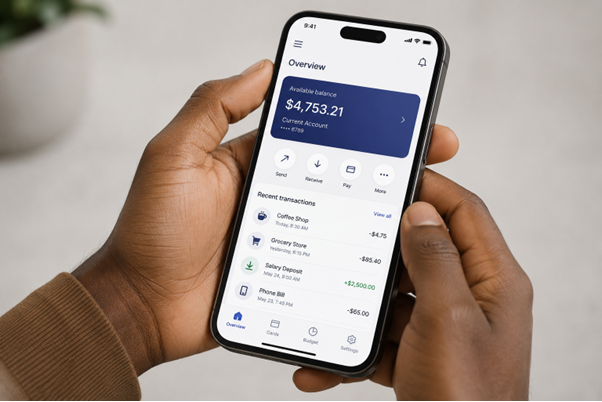
This is where Kina Bank has made its most deliberate push in recent years. According to Business Advantage PNG, Kina Bank CEO Greg Pawson has described digital channels as “the key story of our growth,” with plans to roll out the first electronic Know Your Customer platform in PNG, allowing customers to onboard themselves without any human intervention, open accounts online, and access virtual wallets and virtual cards.
The current digital suite includes the Kina Mobile App for everyday transactions, Kina Personal Online Banking for account management, Kina Corporate Online Banking for business clients, and DigiBankr for opening accounts entirely digitally. There’s also Kina Pei, a contactless mobile payment solution that lets customers tap and go without a physical card.
Cheques accounted for just seven per cent of all transactions in PNG in 2024, down from 44 per cent in 2015, and the Bank of Papua New Guinea has now phased out new cheque books entirely. Kina’s digital push isn’t just a marketing exercise; it’s a response to a genuine structural shift in how PNG’s banking system operates.
Wealth Management and Fund Administration: The Side of Kina Most Articles Miss
Most “Kina Bank” articles stop at the savings account. That misses roughly half the business.
Kina Wealth, the group’s wealth management arm, encompasses several distinct operations:
● Kina Investment and Superannuation Services: fund administration and superannuation management
● Kina Funds Management: wholesale and retail investment fund management
● Kina Nominees: nominee and custodial services
● Kina stockbroking: the leading stockbroking operation in PNG
The scale here is significant. The bank administers superannuation accounts on behalf of nearly 938,000 beneficiaries. For a country with a total population of approximately 10.5 million people, that’s a meaningful portion of PNG’s formal workforce represented in one institution’s administration system.
Why does this matter for an everyday customer? Because if you’re a PNG worker whose superannuation is administered by any of several large funds in the country, there’s a real chance Kina is already managing the backend of your retirement savings, even if you’ve never walked into a Kina branch.
Kina Bank vs. Other PNG Banks: Where It Stands
Papua New Guinea’s banking sector is small by global standards but intensely competitive for the customer base it serves. The major players are BSP Financial Group (the country’s largest bank), ANZ PNG, Westpac PNG, and Kina Bank.
Here’s the honest picture on how they compare:
BSP Financial Group holds the largest market share and has the most extensive branch network across PNG, including rural areas. For customers in remote provinces, BSP often has a physical presence where Kina doesn’t.
ANZ PNG brings international banking infrastructure and is strong on corporate and trade finance, though it’s less focused on the mass retail market in recent years.
Kina Bank’s genuine differentiator is the combination of banking and wealth management under one entity. No other bank in PNG operates the largest stockbroking business and the largest fund administration operation simultaneously. For clients who want a single institution handling their everyday banking, home loan, investment portfolio, and superannuation administration, Kina is the only realistic option at the domestic level.
The trade-off? Branch coverage. Kina’s network is concentrated in urban centers, particularly Port Moresby and Lae. Customers in rural or remote areas often find BSP’s reach more practical for in-person banking needs.
Financial Inclusion: The Bigger Picture Kina Is Part Of

PNG has one of the lowest rates of formal banking penetration in the Pacific. According to the World Bank’s data on Papua New Guinea, Papua New Guinea’s GDP stood at approximately $29.7 billion in 2023, with a large share of the population still outside the formal financial system. In that context, expanding access to financial services isn’t just a business opportunity; it’s a development challenge.
Kina has acknowledged this directly. The bank’s financial inclusion initiatives aim to ensure Papua New Guineans from all walks of life gain access to affordable financial services including payment platforms, savings, credit, and insurance, with a focus on fostering economic growth, reducing poverty, and promoting access in remote locations.
One practical expression of this is Kina’s 15% stake in MiBank, a microfinance provider. MiBank has built digital tools specifically for PNG’s unique conditions, including a Mobile Corporate service that enables customers to authorise transactions on group accounts even without internet access, regardless of location. That kind of infrastructure matters enormously in a country where mobile connectivity is inconsistent and geography makes branch banking impractical for millions of people.
The Bank of Papua New Guinea is also exploring a Digital Kina, a central bank digital currency that would use institutions like Kina Bank as distribution partners. For PNG, the Digital Kina represents an opportunity to leapfrog traditional financial infrastructure and create a more inclusive and efficient financial system. Kina’s existing digital banking infrastructure would make it a natural partner in any such rollout.
FAQs: What People Actually Ask About Kina Bank
What is Kina Bank and where is it based? Kina Bank, formally Kina Securities Limited (ASX: KSL), is Papua New Guinea’s second largest bank, founded in 1985 and headquartered in Port Moresby. It provides personal banking, business banking, wealth management, fund administration, and stockbroking services across PNG.
How do I open a Kina Bank account? You can open an account through Kina’s DigiBankr platform entirely online, or visit a Kina branch in person. The bank has been rolling out electronic Know Your Customer (eKYC) technology that allows full digital onboarding without branch visits.
Is Kina Bank the same as Kina Securities? Yes. Kina Securities Limited is the listed parent company (ASX: KSL, PNGX: KSL), and Kina Bank is its primary banking subsidiary. When people refer to Kina Bank, they typically mean the banking arm of the Kina Securities group.
What digital banking options does Kina Bank offer? Kina offers the Kina Mobile App, Personal Online Banking, Corporate Online Banking, Digital Self-Service kiosks, DigiBankr for account opening, and Kina Pei for contactless mobile payments. The bank is also developing virtual card and virtual wallet capabilities.
Does Kina Bank offer home loans in PNG? Yes. Kina Bank provides home loans, residential property investment loans, personal loans, and school fees loans to individual customers. Business customers can access commercial loans, equipment finance, overdrafts, and bank guarantees.
How does Kina Bank compare to BSP in PNG? BSP Financial Group is PNG’s largest bank with a more extensive rural branch network. Kina Bank is the second largest and differentiates itself through its combined banking and wealth management offering, digital banking investment, and its position as PNG’s leading stockbroking and fund administration company.
Can I invest in Kina Bank as an international investor? Yes. Kina Securities Limited trades on the Australian Securities Exchange under the ticker KSL, making it accessible to international investors through any broker with ASX access. The stock has historically offered a dividend yield in the range of 9 to 10%, though dividend reliability has been variable across its listing history.
What is Kina Bank’s role in superannuation in PNG? Kina is PNG’s largest fund administrator, managing superannuation administration for nearly 938,000 beneficiaries with total funds approaching PGK 19 billion. Its Kina Investment and Superannuation Services arm handles fund administration, wealth advice, and investment management for PNG’s superannuation sector.
Three Things Worth Knowing About Kina Bank
First: Kina Bank is far more than a retail bank. The fund administration and wealth management operations serve nearly a million beneficiaries and manage billions in PNG kina. Any article that describes Kina as just a savings-and-loans bank is giving you an incomplete picture.
Second: the digital transformation is real and accelerating. From DigiBankr account opening to Kina Pei contactless payments to the planned eKYC rollout, Kina is investing seriously in removing the friction from banking in a country where branch access is genuinely difficult for many people.
Third: for investors, Kina Securities on the ASX is a small-cap exposure to PNG’s growing economy, with a dividend yield that stands out but with the volatility and risk profile you’d expect from a frontier market bank.
Whether you’re opening an account, researching PNG’s banking sector, or evaluating Kina Bank as an investment, you’re dealing with an institution that’s been quietly building something substantial since 1985. Visit kinabank.com.pg to explore current products and digital banking options, or check ASX: KSL for the latest investor disclosures.
