


I’m 25 and Earning ₹30,000 a Month: How Should I Start Investing for Long-Term Growth?
A realistic beginner’s roadmap for young Indian professionals who want to build wealth without taking unnecessary risks.
The Short Answer
If you’re 25 years old and earning ₹30,000 per month, you do not need a high salary to start investing successfully.
What matters most is:
- Building a small emergency fund first.
- Automating monthly investments through a SIP.
- Choosing simple, diversified investment products.
- Staying invested for 10–20 years.
- Increasing investments whenever your salary grows.
For most beginners earning ₹30,000 per month, investing ₹3,000–₹5,000 monthly in a low-cost index mutual fund through a SIP is usually a stronger starting point than trying to pick individual stocks. Professional fund management, diversification, and automation reduce many of the mistakes new investors make. (SEBI Investor)
Why ₹30,000 a Month Is Not Too Little to Start Investing
One of the biggest myths in personal finance is that investing is only for people earning six-figure salaries.
In reality, investing rewards time more than income.
A person who starts investing ₹3,000 per month at age 25 often has a significant advantage over someone who waits until age 35 and invests much larger amounts.
The Hidden Superpower: Time
Imagine two people:
| Investor | Monthly Investment | Start Age |
| A | ₹3,000 | 25 |
| B | ₹10,000 | 35 |
Investor B invests more money every month.
Yet Investor A gets something much harder to buy later:
An extra decade of compounding.
Compounding means your investment gains begin generating gains of their own. Over long periods, this creates exponential growth rather than linear growth.
This is why your first goal isn’t maximizing returns.
Your first goal is simply:
Start early and stay consistent.
Before Investing: Build a Financial Foundation
Many articles jump straight into stock market recommendations.
That is often a mistake.
Before investing aggressively, you need a basic financial safety net.
Step 1: Create an Emergency Fund
An emergency fund protects you from:
- Job loss
- Medical expenses
- Family emergencies
- Sudden travel needs
- Unexpected repairs
A good starting target is:
1–3 months of expenses initially
Then gradually build toward:
3–6 months of expenses
For someone earning ₹30,000:
If monthly essential expenses are roughly ₹18,000–₹20,000, your first emergency fund target could be:
₹50,000–₹60,000
Keep this money in:
- High-interest savings accounts
- Short-term deposits
- Liquid mutual funds
The purpose is safety and accessibility—not high returns.
Why This Matters
Without an emergency fund, many people end up selling investments during market crashes simply because they need cash urgently.
That destroys long-term wealth creation.
A Realistic ₹30,000 Salary Budget Blueprint
Many finance articles assume everyone can save 40–50% of income.
That is often unrealistic in Indian cities.
Here’s a more practical framework.
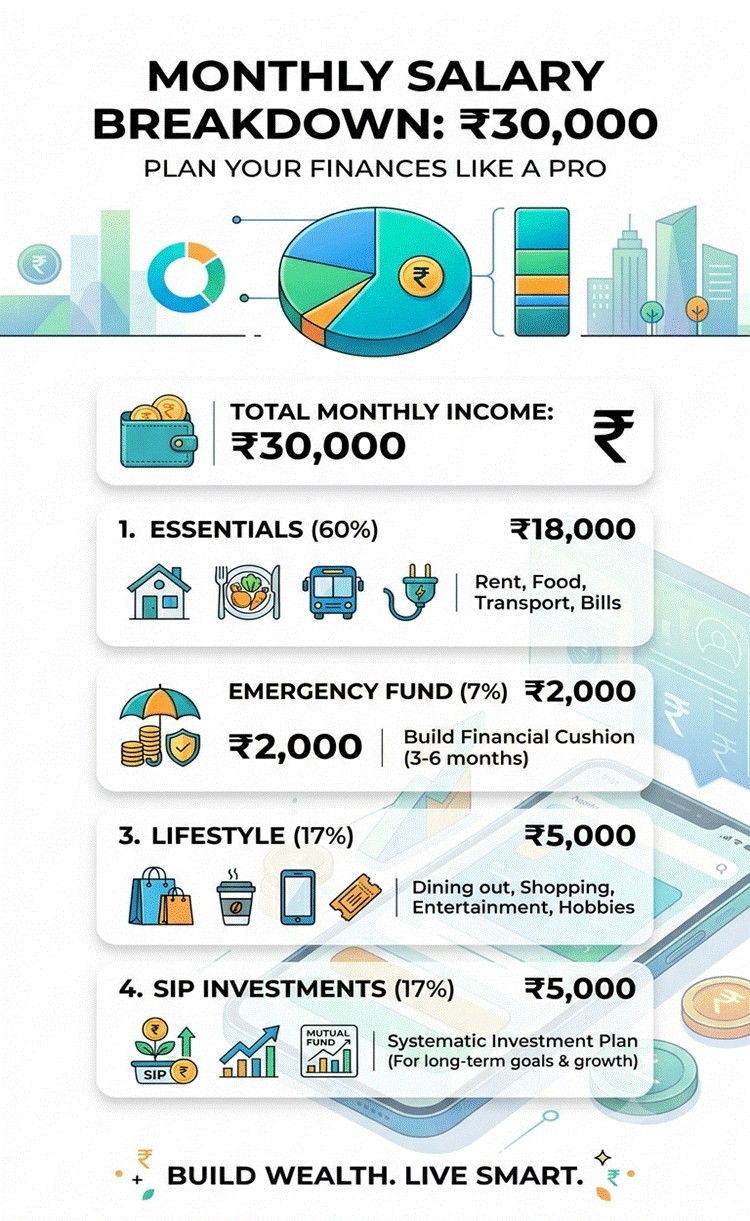
Example Monthly Budget
| Category | Amount |
| Rent, Food, Commute, Bills | ₹18,000 |
| Emergency/Health Buffer | ₹2,000 |
| Lifestyle & Entertainment | ₹5,000 |
| Investments (SIP) | ₹5,000 |
Total: ₹30,000
Why This Works
This budget does three things simultaneously:
- Covers necessities
- Protects against emergencies
- Creates long-term wealth
Most importantly, it is sustainable.
A perfect budget that lasts one month is less valuable than a realistic budget that lasts ten years.
Where Should a Beginner Invest First?
For most first-time investors, simplicity beats complexity.
Option 1: Index Mutual Funds (Recommended Starting Point)
An index fund simply tracks a market index.
Examples include funds tracking:
- Nifty 50
- Sensex
- Nifty Next 50
Instead of betting on one company, you own small pieces of many companies.
Why Beginners Benefit
- Instant diversification
- Low cost
- No stock-picking expertise required
- Historically effective for long-term investing
Many experienced investors eventually discover that consistently beating broad market indexes is difficult.
Practical Takeaway
If you are confused by hundreds of fund options:
Start with one broad-market index fund SIP.
Keep it simple.
Mutual Funds vs Stocks: Which Is Better for Someone With Zero Experience?
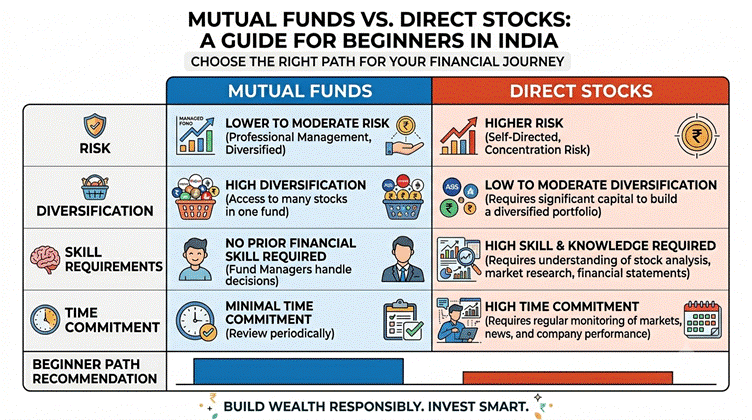
Direct Stocks
Pros:
- Potentially higher returns
- Greater control
Cons:
- Requires research
- Higher risk
- Emotional decision-making
- Greater chance of mistakes
Equity Mutual Funds
Pros:
- Professional management
- Diversification
- Easy automation
- Lower learning curve
Cons:
- Returns may not match the best-performing individual stocks
The Better Choice for Most Beginners
If you’re investing your first ₹3,000–₹5,000 per month:
Mutual funds usually provide a safer learning environment than direct stock picking.
Mutual funds are regulated under a strong framework by the Securities and Exchange Board of India (SEBI) and offer diversification and professional management. (SEBI Investor)
What Is a SIP and Why Do So Many Investors Use It?
A Systematic Investment Plan (SIP) allows you to invest a fixed amount automatically every month.
Example:
- Salary credited on the 1st
- SIP runs on the 3rd
- Investment happens automatically
This removes a major problem:
The Psychology Problem
Most people don’t fail because they lack investment knowledge.
They fail because they procrastinate.
Automation eliminates decision fatigue.
A growing number of investors and market observers view automated investing as one of the biggest reasons SIP investing continues to expand in India. (Reddit)
Practical Takeaway
Set your SIP date within 2–5 days of salary credit.
Invest before you get tempted to spend.
The Math: What Happens If You Invest ₹3,000 Per Month?
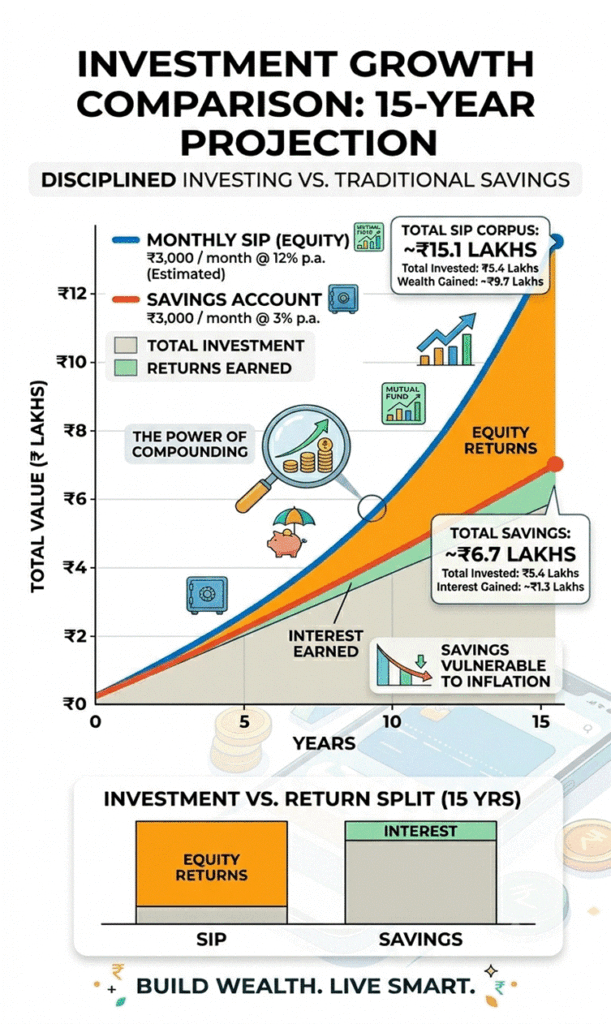
Let’s use a hypothetical long-term return assumption of 12% annually.
Scenario A: ₹3,000 Monthly SIP
- Monthly SIP: ₹3,000
- Duration: 15 years
- Assumed Return: 12%
Approximate portfolio value:
₹15 lakh+
Scenario B: Savings Account at 3%
If the same amount sits in a savings account earning around 3% annually:
Approximate value:
₹7 lakh–₹8 lakh
The Difference
Compounding potentially creates a gap of several lakhs of rupees.
The exact future return will vary because market returns are never guaranteed. Mutual fund investments are subject to market risk, and past performance does not guarantee future results. (Mera SIP Online by Trustner)
Unique Insight
Most people focus on finding the “best fund.”
The bigger driver of wealth is often:
- Starting early
- Increasing SIPs over time
- Staying invested during market downturns
Should You Invest ₹3,000 or ₹5,000 Per Month?
Use this simple rule.
If You Have No Emergency Fund
Invest:
- ₹2,000–₹3,000 SIP
- Build emergency fund simultaneously
If Emergency Fund Exists
Invest:
- ₹5,000 SIP or more
If Salary Increases
Increase SIP by:
- 10–20% annually
This strategy is called a SIP step-up.
Example:
| Year | Monthly SIP |
| Year 1 | ₹5,000 |
| Year 2 | ₹6,000 |
| Year 3 | ₹7,000 |
| Year 4 | ₹8,000 |
This often has a bigger impact than chasing slightly higher returns.
What About PPF and NPS?
Public Provident Fund (PPF)
PPF offers:
- Long-term savings
- Tax benefits
- Government backing
Suitable for:
- Conservative investors
- Retirement planning
National Pension System (NPS)
NPS offers:
- Retirement-focused investing
- Tax benefits
- Equity and debt exposure
Suitable for:
- Long-term retirement goals
Which Should a 25-Year-Old Prioritize?
For someone starting from zero:
- Emergency fund
- Equity index fund SIP
- PPF/NPS additions
- Advanced diversification later
The biggest challenge at age 25 is usually building investment habits, not optimizing tax strategies.
Do You Need to Worry About Taxes Right Now?
Yes—but not obsessively.
As a beginner:
Focus more on:
- Starting investments
- Consistency
- Asset allocation
Than on:
- Complex tax calculations
- Advanced tax harvesting
- Frequent portfolio changes
As your investments grow, understanding capital gains taxation becomes more important.
For now, developing investing discipline is usually the higher-priority task.
Which Apps Can Beginners Use?
Popular investment platforms in India include:
When evaluating platforms, prioritize:
- Ease of use
- Direct mutual fund access
- Transparency
- Good customer support
Avoid choosing an app solely because an influencer promotes it.
Unique Insight
The platform matters far less than:
- Starting early
- Staying invested
- Maintaining discipline
A mediocre investor on a great app usually underperforms a disciplined investor on an average app.
Common Mistakes First-Time Investors Make
1. Trying to Become a Stock Expert Overnight
Investing is not a race.
You do not need to analyze balance sheets on day one.
2. Following Social Media Tips
Many viral investment ideas ignore risk completely.
3. Chasing Last Year’s Best Fund
Past winners are not guaranteed future winners.
4. Stopping SIPs During Market Falls
Market declines are uncomfortable.
But long-term investors often benefit from continuing SIPs through downturns.
5. Ignoring Inflation
Money sitting idle loses purchasing power over time.
Investing helps combat inflation’s impact on future buying power.
A Simple 30-Day Action Plan
Week 1
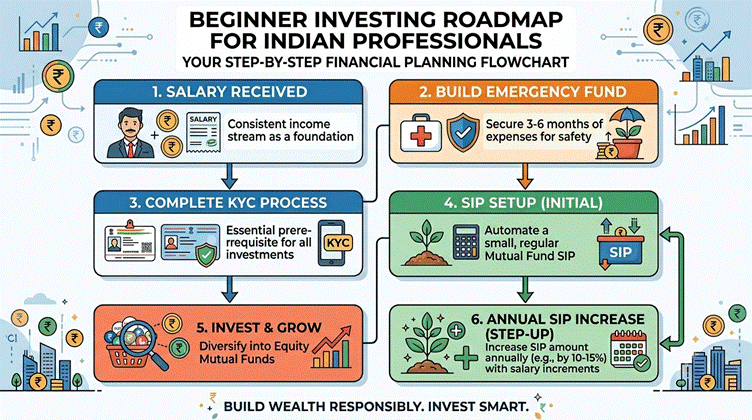
- Calculate monthly expenses
- Open a dedicated emergency fund account
Week 2
- Build first ₹5,000–₹10,000 emergency savings
Week 3
- Select one direct index mutual fund
- Complete KYC
Week 4
- Start a ₹3,000–₹5,000 SIP
- Set auto-debit
Then:
- Review every six months
- Avoid checking returns daily
What Could Your Future Self Thank You For?
At 25, wealth creation feels slow.
At 40, the effects of compounding become much more visible.
The goal is not to get rich quickly.
The goal is to create a financial system that works automatically while you focus on your career, health, relationships, and personal growth.
A ₹30,000 salary is not a limitation.
Failing to start is.
