
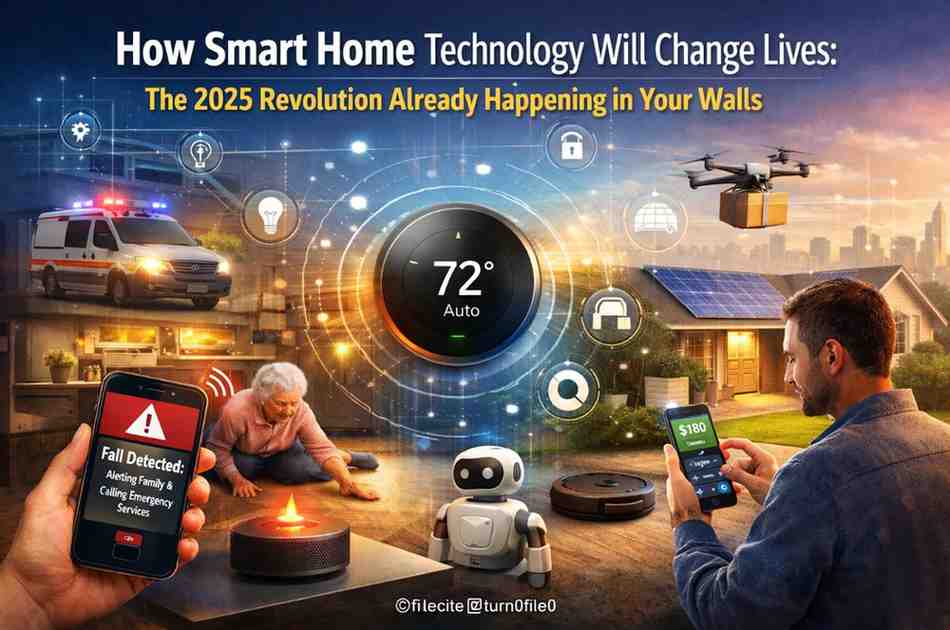
There’s a moment most homeowners in 2026 have had or are about to have. You’re standing at your front door with both hands full, it’s raining, and you’re fumbling for keys that are somewhere at the bottom of a bag. At that exact moment, someone who upgraded to a modern smart lock just walked through their door hands-free, without touching anything, because their phone’s Ultra-Wideband chip sensed them approaching from 10 feet away and unlocked automatically.
That’s not a premium luxury anymore. It’s increasingly the norm and it’s the visible surface of a much deeper transformation happening across the entire landscape of locks, digital security systems, and the locksmithing profession itself.
This guide covers everything that matters in 2026: the technology standards reshaping how physical access works, the Google and Samsung updates you need to know about first, what real digital security looks like at the door level, how the locksmithing profession is being rebuilt from the ground up, and the honest tradeoffs nobody else is clearly explaining.
The 2026 Standards Shake-Up: Google, Aliro, and Why Your Lock Just Got a Lot Smarter
This is the update that every other article on smart locks should be leading with — and most aren’t.
Two things happened in early 2026 that fundamentally changed the smart lock landscape. If you bought a smart lock before understanding them, you may already be behind.
Google’s Matter Door Lock Expansion
Throughout 2025, Google rolled out expanded Matter door lock support in the Google Home app, including lock history, lock notifications, guest passcode scheduling, and — critically — a web console for controlling smart locks, thermostats, and other devices from any browser. In March 2025, Google and Yale announced a purpose-built partnership: the Yale Smart Lock with Matter, carrying Google’s coveted “Google Home Preferred Product” badge. This isn’t just a “Works with Google Home” stamp — it means the lock was specifically designed for premium integration, effortless setup, and reliable performance within the Google Home ecosystem.
The Yale Smart Lock with Matter, available since June 2025 at $189.99, runs on Matter over Thread technology — the combination that delivers sub-100ms latency, longer range, lower power consumption (up to 12 months of battery life on four AA batteries), and faster, more reliable communication than previous smart lock protocols. Yale’s Chief Product Officer at Google Home & Nest, Anish Kattukaran, called it “the blueprint for a secure, interoperable, and truly helpful home.”
Google also launched Gemini for Home, a voice assistant integration that puts Google’s most capable AI model directly into smart home control — meaning you can now ask nuanced, contextual questions about your home’s security status and receive intelligent responses, not just scripted command confirmations.
Aliro 1.0: The “Matter for Digital Keys” Standard
Then, in February 2026, the Connectivity Standards Alliance (CSA) — the same organization that created Matter — published the Aliro 1.0 specification, and certification for locks and readers opened immediately. Aqara, SwitchBot, Ultraloq (U-tec), Schlage, Level, and Nuki have all announced Aliro-compatible locks. Samsung rolled out Digital Home Key — built on Aliro — to Galaxy devices starting March 2026, with UWB hands-free support arriving April 2026.
So what is Aliro, and why does it matter?
Aliro is the universal digital key standard. Where Matter standardizes device control (“lock the door,” “what’s the door status?”), Aliro standardizes the authentication credential itself — how your phone or wearable proves its identity to the lock and gets access granted. Before Aliro, Apple users had Apple Home Key (NFC and UWB unlocking via iPhone or Apple Watch), and Android users had… nothing equivalent. Every lock manufacturer used proprietary apps. A household with mixed iPhone and Samsung devices had to choose one ecosystem and leave the other out.
Aliro ends that. It supports three physical communication methods:
- NFC (Near Field Communication): Tap your phone to unlock. Works even on a dead battery if the phone supports NFC power reserve
- BLE (Bluetooth Low Energy): Initiates authentication as you approach, range of several meters
- UWB (Ultra-Wideband): Precise spatial positioning, sub-centimeter ranging accuracy, enables fully hands-free unlocking as you walk toward the door
The security architecture behind Aliro is genuinely impressive. It uses asymmetric cryptography, PKI-based authentication, AES-256 encryption, and hardware security modules (HSM) for key storage. Critically, it’s designed to resist relay attacks — the primary vulnerability of older Bluetooth-based smart locks, where an attacker can amplify your phone’s signal to unlock your door while you’re blocks away. UWB physically verifies you’re within centimeters of the lock before authenticating.
Tobin Richardson, President and CEO of the Connectivity Standards Alliance, put it clearly: “Aliro is solving the fragmentation that has held back digital key adoption, replacing it with a single interoperability standard. By connecting the access control industry directly to leading mobile wallet ecosystems, it delivers a secure, frictionless experience that goes well beyond the front door.”
This is the standard that will define smart lock security for the next decade. If you’re buying a smart lock in 2026, look for Aliro certification.
For deeper technical understanding of access control cryptography and standards, NIST’s Computer Security Resource Center the US government’s National Institute of Standards and Technology — publishes accessible educational resources on digital authentication, encryption standards, and physical access control security that are freely available to US and UK residents alike.
The Market Reality: Smart Locks in 2026 Are Not a Niche Product
Let’s put some numbers on this.
The global smart lock market was valued at $3.5 billion in 2025 and is projected to reach $17.75 billion by 2034 — a CAGR of 19.7%, according to Fortune Business Insights. In North America alone, the market commanded a 43.2% global share in 2025, with the US market projected to hit $1.31 billion in 2026. Approximately 69.91 million US households were actively using smart home technologies by 2024, up 10.2% year-over-year.
The UK is keeping pace. The UK smart home market — within which digital security systems are among the fastest-growing segments — was valued at £9.74 billion in 2024 and is on course for £17.56 billion by 2030. Smart security devices consistently rank among the top three smart home purchases after smart speakers and smart TVs.
A few data points that reveal where this market is actually going in 2026:
- Deadbolt smart locks hold the largest product segment at 43–72% of installations depending on the study — because they fit existing door prep holes and offer the strongest mechanical resistance
- Wi-Fi-connected locks are growing fastest, driven by demand for full remote access and cloud integration
- Bluetooth remains the leading connectivity type overall (52% share) due to low power consumption and reliable proximity performance
- Smartphone-based authentication holds the largest share of unlocking methods — meaning your phone is now your primary key for millions of households
- The commercial segment is growing fastest of all, at a CAGR exceeding 21%, driven by hybrid workplaces, co-working spaces, hospitality, healthcare, and multi-family residential developments
The bottom line: smart locks in 2026 aren’t a tech enthusiast’s toy. They’re the default security hardware for new construction and renovation projects across the US and UK, and the retrofit market is accelerating fast.
How Smart Locks and Digital Security Systems Actually Work in 2026
This section exists because most coverage treats smart locks as black boxes — “tap your phone and the door opens.” The reality is more interesting, and understanding it helps you make better decisions about your own security.
The Hardware Layer
Modern smart locks are miniaturized computers mounted in your door. A typical premium 2026 lock contains:
- A microprocessor (ARM Cortex-class) running a real-time operating system
- Wireless radio modules: UWB transceiver, Bluetooth 5.x radio, often Wi-Fi
- A Secure Element (SE) a tamper-resistant hardware chip that stores cryptographic keys and performs authentication operations in a hardware-isolated environment
- Biometric sensors (in higher-end models): capacitive fingerprint scanner or 3D facial recognition camera
- A motorized deadbolt actuator typically brushless motor technology, borrowed from EV engineering (Nuki’s Ultra uses this approach) for quieter, longer-lasting operation
- A battery management system optimized for months or years of operation
The Ultraloq Bolt Mission UWB+NFC which launched at CES 2025 as the first UWB smart lock and is now the first fully Aliro-certified lock uses two-layer AES-128 bit encryption with AWS cloud integration and can store 50 fingerprints and 50 access codes locally. UWB provides what its manufacturer calls “precise spatial awareness” the lock can verify not just that your authenticated device is nearby, but that it’s specifically in front of the door, not behind it, not to the side.
The Authentication Stack
In 2026, a well-designed digital security system uses layered authentication — what security professionals call defense in depth:
Layer 1 -Physical credential: UWB/NFC/BLE proximity detection via phone or wearable. The Aliro standard governs this in compliant locks.
Layer 2 – Knowledge factor: A PIN code or passphrase as a backup, stored locally on the lock’s Secure Element (not in the cloud).
Layer 3 – Biometric: Fingerprint or facial recognition for high-security contexts or as a standalone authentication method. TCL’s Smart Lock D1 Pro, launched at CES 2025, uses AI palm vein scanning — a biometric modality that’s far harder to spoof than fingerprints because it reads the internal vascular structure of your palm, invisible to cameras or physical casts.
Layer 4 -Behavioral/contextual AI: Emerging capability where the lock’s AI system learns normal access patterns (time of day, frequency, duration) and flags anomalies for review.
The Cloud vs. Local Control Question
Here’s an honest tension in smart lock design that nobody explains clearly: almost all premium smart lock features require cloud connectivity for remote access — unlocking your door from another country, receiving real-time notifications, sharing digital keys with guests. But cloud dependency creates vulnerabilities. If the manufacturer’s servers go down, or they get acquired and shut down the platform, your lock may lose functionality.
Matter’s approach addresses this partially. Matter devices always support local control — meaning your lock will still respond to commands within your home network even without internet. The Aliro protocol similarly supports offline authentication through its “Two-Phase Access Protocol”: if the lock already recognizes your device, it authenticates instantly via a “fast handshake” without any cloud round-trip. If the device is new or the lock is offline, it performs a more thorough local verification using the signed credential stored in your phone’s secure wallet.
For homeowners in the USA and UK: when evaluating smart locks, ask specifically whether local control works without internet. If the answer is no, that’s a significant risk.
Smart Locks Compared: The 2026 Landscape at a Glance
The market has matured enough that you can sort locks into clear tiers based on what they actually deliver.
Premium Tier: AI + Biometric + UWB
Ultraloq Bolt Mission UWB+NFC (US, ~$299): The first Aliro-certified lock, first UWB smart lock. Fingerprint, PIN, NFC tap, UWB hands-free, app control. Two-layer AES-128 encryption. The benchmark for 2026.
TCL Smart Lock D1 Pro (US launch expected mid-2026): AI palm vein scanning — the most sophisticated biometric available in a consumer lock. Extremely difficult to spoof. Good for high-security residential or commercial applications.
Yale Smart Lock with Matter (US, $189.99): The Google Home Preferred Product. Matter over Thread, 12-month battery life, designed to complement Nest Doorbell. The best choice if you’re in the Google ecosystem. Available in Snow and Matte Black.
SwitchBot Lock Ultra (US & UK, ~$219): 3D facial recognition via Vision Keypad, fingerprint, NFC, PIN, geofencing. Nine-month rechargeable battery. Retrofit design fits most existing deadbolts.
Mid-Tier: Solid Performance, Core Features
Schlage Encode Plus (US, ~$149): ANSI Grade 1 certified — the highest residential security rating. Apple Home Key support, built-in Wi-Fi (no hub required). Aliro support announced for 2026. Schlage’s Grade 1 rating means it passed tests for physical attacks including drilling, picking, and forced entry that lower-rated locks don’t undergo.
Kwikset Halo Touch (US & UK, ~$179): Fingerprint + app + keypad. Wi-Fi built in. Solid mid-market option. Note: the Halo Select Plus NFC version will not be updated for Aliro according to Kwikset — an important consideration if Aliro compatibility matters to you.
Aqara Smart Lock U300 (US & UK, ~$149): Matter and Thread compatible, 8-month battery, excellent local control. Strong choice for Apple HomeKit and Google Home users who prioritize reliability over biometrics.
Retrofit Champions
Nuki Smart Lock Ultra (UK focus, ~£229): Fits over your existing cylinder — no door modification needed. Brushless EV-inspired motor. Aliro support confirmed. The dominant choice for UK renters who can’t modify their door hardware and for listed buildings with heritage restrictions on hardware changes.
August Smart Lock Pro (US & UK, ~$169): Retrofit design that leaves the exterior keyhole intact. Good for rentals or mixed households where traditional key backup matters.
The Honest Comparison: What Matters vs. What’s Marketing
Most marketing for smart locks focuses on the biometric headline. Here’s what actually differentiates products when the glossy copy fades:
Security certification matters more than features. ANSI Grade 1 (US) and Sold Secure Diamond (UK) ratings test real-world physical attack resistance. A $300 lock with facial recognition but no physical security certification is less safe than a $150 Schlage Grade 1 deadbolt. Don’t let digital features distract from mechanical integrity.
Battery life is a real issue. Locks with UWB radios consume significantly more power than Bluetooth-only models. A UWB lock with a 3-month battery that dies in December, when you can’t get to a hardware store and house guests are arriving, is a real-world problem. Check realistic battery life claims, not lab conditions.
Encryption standard and key storage location matter. Locks that store credentials in a dedicated Secure Element chip (like Aliro-certified devices and Schlage Encode Plus) are significantly more resistant to extraction attacks than those storing credentials in general microcontroller flash memory.
The Locksmithing Profession in 2026: Rebuilding From the Studs Up
This is the part of the smart lock story that almost nobody covers — and it’s arguably the most important for anyone in the trades.
Traditional locksmithing was a skilled mechanical craft. You understood pin tumbler cylinders, wafer locks, disc detainers, mortise mechanisms. You picked locks when owners were locked out. You cut keys by code. You installed deadbolts and door hardware. It was physical, tactile, deeply specialized work.
That’s not going away — but it’s been joined by something fundamentally different. And locksmiths who haven’t adapted are watching their market erode in real time.
What the Modern Locksmith Actually Does in 2026
Smart lock installation and commissioning. Installing a Schlage Encode Plus or Yale Matter lock correctly isn’t just screwing in hardware — it’s network enrollment, Matter commissioning, thread border router configuration, app onboarding, and verification of encryption status. Doing this wrong creates security vulnerabilities. Locksmiths who understand this are genuinely valuable; those who don’t are being cut out as homeowners increasingly DIY simple installations.
Access control system design. Commercial clients — the sector growing at 21%+ CAGR — need integrated security architectures: biometric readers at server rooms, time-based access schedules for cleaning staff, audit trail systems that satisfy insurance and compliance requirements, integration with HR systems that auto-revoke access when an employee leaves. This is not a job for a consumer smart lock app. It requires expertise in platforms like Brivo, Verkada, Salto, and Honeywell access management systems.
Cybersecurity integration. Here’s the skill gap most traditional locksmiths haven’t addressed but must: smart locks are IoT devices on your client’s network. A compromised router means compromised lock credentials. A locksmith recommending a Wi-Fi lock to a client with factory-default router settings has installed a security liability, not a security upgrade. The 2025 locksmith who’s worth hiring understands network segmentation, IoT device isolation, firmware update management, and credential rotation.
Emergency access recovery. When a smart lock fails — battery dead, firmware glitch, network outage, app account locked — getting back in requires both physical knowledge (traditional bypass tools still work on the mechanical backup) and digital troubleshooting. This hybrid expertise is genuinely valuable and poorly served by either traditional locksmiths or IT support.
Biometric system installation and calibration. Facial recognition and fingerprint systems require careful setup: enrollment procedures, false acceptance rate tuning, lighting condition assessment for camera-based systems, and ongoing maintenance. This is specialized work that manufacturers don’t adequately support through consumer documentation.
The profession hasn’t died it’s been promoted. The locksmiths thriving in 2026 are those who embraced the transition, got manufacturer certifications for digital lock platforms (Yale, Schlage, Assa Abloy, Dormakaba all offer these), and positioned themselves as “security technology integrators” rather than “key cutters.” Honest admission: the transition has been painful for many who built 20-year careers on mechanical expertise. The industry is genuinely still catching up.
Digital Security Systems: Beyond the Front Door
Smart locks are the most visible piece of a broader digital security ecosystem that’s changed dramatically. Here’s how the pieces fit together in 2026.
Video Doorbells + Smart Locks: The Integrated Front Door
The combination of a video doorbell and a smart lock — particularly the Nest Doorbell + Yale Smart Lock pairing within Google Home — creates something meaningfully different from either device alone. You can see who’s at the door from anywhere in the world, hold a two-way conversation via the doorbell speaker, and unlock remotely with a tap — all within the same app, with a single gesture. For Airbnb hosts, rental property managers, elderly parents living alone, or anyone who regularly needs to let people in remotely, this integration eliminates a class of friction that previously required either physical presence or awkward key-under-mat arrangements.
Commercial Access Control: The Real Growth Story
The residential market gets the coverage, but the commercial market tells the growth story. Hybrid workplaces need access control that adapts in real time — an employee badge that works Monday through Thursday but not Friday because they’re remote. A contractor’s access card that expires precisely at 5 PM on the last day of their project. A healthcare facility where different staff levels access different zones of a building on different shifts. A hotel where thousands of room keys need to be issued, tracked, and invalidated daily.
Cloud-based commercial access control platforms — Brivo, HID Global, Avigilon, Verkada — have grown rapidly as businesses realized that legacy keyed systems couldn’t provide audit trails, couldn’t integrate with HR databases, and couldn’t be managed without physically re-keying locks. The commercial smart lock segment’s 21%+ CAGR reflects this fundamental shift.
IoT Security: The Honest Risk Assessment
Here’s the uncomfortable truth that enthusiast coverage of smart locks consistently underplays: every internet-connected device on your home or business network is a potential attack surface. The UK’s Product Security and Telecommunications Infrastructure Act (PSTI) — enacted in April 2024 — now legally requires all internet-connected consumer devices sold in the UK to meet minimum security standards: unique default passwords, a published vulnerability disclosure policy, and a defined support period. This is meaningful progress.
In the US, the FCC’s Cyber Trust Mark program began in 2024, allowing certified IoT devices — including smart locks — to carry a label indicating they meet NIST cybersecurity standards. When buying smart locks in the US in 2026, the Cyber Trust Mark is a meaningful signal.
But regulatory floors are not ceilings. The practical security advice:
Frequently Asked Questions: Smart Locks, Digital Security & Locksmithing 2026
What is the most secure smart lock in 2026? Security is multi-dimensional — mechanical and digital. For mechanical security, Schlage Encode Plus (ANSI Grade 1, US) and Assa Abloy products with Sold Secure Diamond ratings (UK) lead. For digital security, Aliro-certified locks with Secure Element-based credential storage offer the strongest protection against relay attacks and credential extraction. The Ultraloq Bolt Mission UWB+NFC is the first Aliro-certified lock available, combining both physical and digital security robustness.
What is the Aliro standard, and do I need it? Aliro is the universal digital key standard published by the Connectivity Standards Alliance in February 2026, enabling NFC tap and UWB hands-free unlocking across iPhone, Android, and Samsung Galaxy devices — in the same ecosystem. If your household uses mixed phone brands, or you want your front door experience to work from your phone’s native wallet (like Google Wallet or Samsung Wallet), Aliro matters. If you’re Apple-only and happy with Apple Home Key, Aliro adds less immediate value.
Can Google Home control smart locks? Yes. Google Home has supported Matter-certified smart locks since January 2025, when it began rolling out lock history, notifications, and guest passcode management in the Google Home app. The Yale Smart Lock with Matter carries Google’s Preferred Product badge and is the recommended option for Google Home users. Google’s Gemini for Home voice assistant can also control Matter-enabled locks through natural voice commands.
Are smart locks safe from hacking? Modern smart locks with proper implementation are meaningfully more resistant to credential attacks than older Bluetooth or Z-Wave locks. Aliro-certified locks use asymmetric cryptography and UWB physical proximity verification to resist relay attacks. That said, no connected device is immune to all threats. Following the practical security practices above — firmware updates, network segmentation, strong passwords — dramatically reduces real-world risk.
How is the locksmithing profession changing? Modern locksmiths in 2026 need expertise in: smart lock commissioning and network enrollment, access control system design for commercial properties, cybersecurity basics for IoT environments, biometric system installation and calibration, and traditional mechanical skills for emergency bypass situations. The most in-demand locksmiths have combined traditional certification with manufacturer digital lock certifications from Yale, Schlage, Assa Abloy, and Dormakaba.
Do smart locks work without internet? Yes — if designed correctly. Matter-certified devices support local control without cloud connectivity. Aliro-certified locks authenticate via local credential stored in your phone’s secure wallet, without requiring an internet round-trip. Bluetooth-based locks generally work offline for proximate unlocking. Wi-Fi-dependent features like remote access and real-time notifications require connectivity. Always test offline behavior before relying on a smart lock as your primary entry point.
What should I look for in a smart lock in the UK specifically? In the UK, prioritize locks with Sold Secure Diamond or Gold ratings for mechanical security these are independently tested to British standards. Ensure any connected device complies with the UK PSTI Act (all products sold legally in the UK after April 2024 should). For renters or listed buildings: retrofit locks like Nuki and August that fit over existing cylinders without door modification are the only practical choice. Aliro-certified locks are beginning to arrive in UK retail in mid-2026.
What Changes, What Doesn’t, and What to Do Now
Physical security has a 4,000-year history. The pin-tumbler cylinder that Linus Yale invented in the 1860s is still inside the door of most homes in America and Britain. That isn’t going away tomorrow — mechanical backup will remain a legal and practical requirement for most residential and commercial properties for the foreseeable future.
What is changing — and changing fast in 2026 is the intelligence layer above that mechanical foundation. The Aliro standard means your phone is now a universal key, secured by the same cryptographic architecture that protects bank transactions. Matter over Thread means your lock talks to your doorbell, thermostat, and alarm in a common language, enabling automations that were impossible 18 months ago. Google’s Gemini-powered Home platform means you can ask your home what’s happening at the front door and get an intelligent, contextual answer.
For homeowners in the USA and UK: 2026 is the year to upgrade, but be deliberate. Buy Aliro-certified. Prioritize ANSI Grade 1 (US) or Sold Secure Diamond (UK) mechanical ratings. Choose a lock that works locally without internet. Consider your ecosystem — Google Home, Apple Home, or Samsung SmartThings — and pick a device with the corresponding deep integration.
For security professionals and locksmiths: the trade has never offered more opportunity. The commercial access control market is exploding, the skill gap between traditional locksmiths and the digital security demands of 2026 is wide, and the professionals who bridge it are commanding premium rates. Get manufacturer certifications. Learn network security basics. Position yourself as a security integrator, not just a lock changer.
The door is still there. The lock still turns. Everything about how it knows who to let in has changed completely.
Data sources: Fortune Business Insights Smart Door Lock Market Report (2025); Grand View Research Smart Lock Market Analysis (2025); IMARC Group Smart Lock Market Report (2025); Fact.MR Smart Locks Market Forecast 2026–2036; Connectivity Standards Alliance Aliro 1.0 Specification (February 2026); Yale/Google partnership announcement (March–June 2025); Samsung Digital Home Key press release (March 2026); UK PSTI Act (April 2024). All statistics referenced are from their most recently available publication as of April 2026.